How to Build an Emergency Fund While Living in Dubai
-
Expats need bigger buffers than the textbook: 3 to 6 months of essential expenses minimum, 6 or more for single-income families and anyone whose visa hangs on their job, because unemployment here starts a visa countdown, not just a job search.
-
Size it on essentials, not lifestyle: rent share, utilities, groceries, school fees, insurance, minimum debt payments. For a single professional that's typically AED 25,000 to 50,000; for a family, AED 90,000 to 150,000.
-
Location matters: instant-access UAE savings account or fixed deposits laddered monthly, in dirhams. Not stocks, not crypto, not your home-country account three transfer-days away.
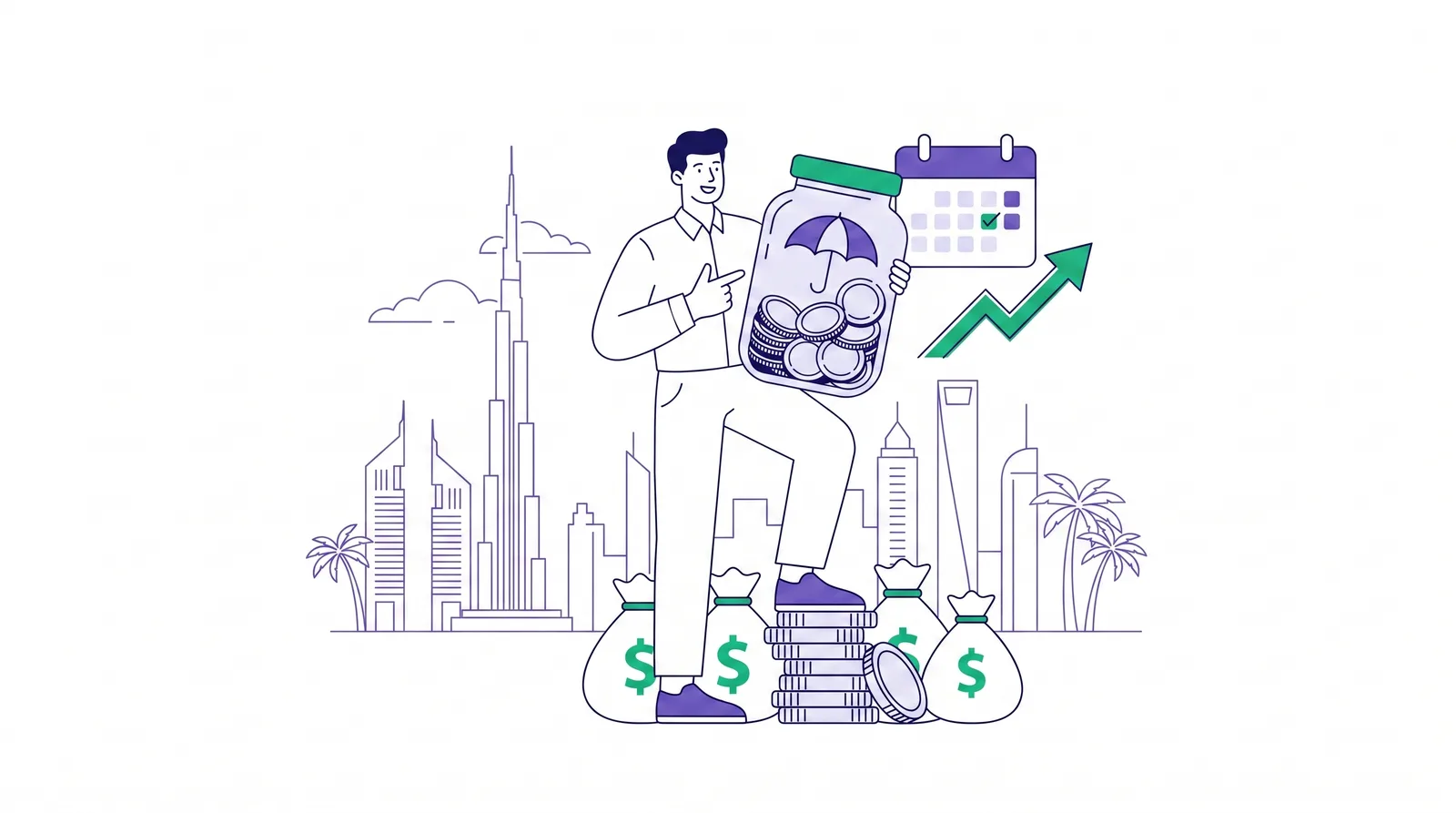
The emergency fund is boring, which is why it's underbuilt, and Dubai is the market where skipping it hurts most. Here's the UAE-specific case, size, location, and build sequence.
Why the expat version is bigger
Lose a job in your home country and life continues while you search. Lose one here and several clocks start at once: the visa grace period (typically 30 to 180 days depending on visa type), dependents' visas tied to yours, school continuity questions, and, if it comes to leaving, the genuine cost of relocation. Meanwhile banks can link end-of-service payouts to outstanding loans, and a missed instalment in the scramble does multi-year damage to your credit file. ILOE, the mandatory unemployment scheme, softens this (up to 60% of salary for up to three months) but caps out quickly and doesn't cover resignation or the visa mechanics. The fund is what buys calm decisions.
Sizing it honestly
Count essentials only: housing (your rent divided monthly, even if paid in cheques), utilities, groceries, transport, insurance, school fees if applicable, and minimum debt payments. Multiply by your months target: three for dual-income no-kids with in-demand skills, six for single-income families, more if your industry hires slowly. Ignore lifestyle lines; the emergency version of you doesn't brunch. If you're carrying expensive card debt, the sequence changes: build a one-month mini-buffer, then kill the card debt first, then finish the fund.
Where to keep it
Rules: dirhams (your emergency bills are in dirhams), instant or next-day access, capital-stable, separate from your spending account. That means a UAE savings account (several pay meaningful rates on balances with conditions) or a ladder of 1 to 3 month fixed deposits rolling monthly. Explicitly not: investments that can be down 30% the month you need them, and not solely your home-country account, where transfer timing and FX spread become part of your emergency.
Keep the account invisible: no card attached, not in your banking app's front screen if the bank allows hiding, named something with a job ("Runway"). Friction is the feature.
Building it without hating the process
-
Automate on payday. A standing order the morning salary lands, sized from your budget's surplus line; 10 to 20% of income is the normal band. What you don't see, you don't spend.
-
Lump-sum the windfalls. Bonuses, gratuity from a job change, tax refunds from home: 50%+ goes to the fund until it's full. This is how funds finish in months instead of years.
-
Cut with a target, not a mood. The 50 ways list works better when each cut has a destination; "the AED 600 I saved on the car insurance renewal goes to Runway" sticks, generic frugality doesn't.
-
Track the number weekly. A fund you watch grows faster; the automatic tracking setup makes the watching free.
What counts as an emergency
Job loss, medical events beyond insurance, urgent family travel, unavoidable relocation. Not Salik top-ups, not the summer flight you knew was coming (that's the annual-lumps system in the family budget), and not a good deal on anything. After a genuine withdrawal, refilling becomes the top budget priority again.
Run your target number and current runway through the UAE Budget Calculator; it computes both from your inputs.
Sources and References
-
ILOE, Involuntary Loss of Employment scheme (iloe.ae)
-
UAE visa grace period provisions (icp.gov.ae); published UAE bank savings and deposit rates (2025 to 2026)
This article is for general information and does not constitute financial advice.
Published on 9 September 2026.