Stocks vs Dubai Real Estate: Which Is the Better Investment in 2026?
-
Neither wins outright: Dubai property offers leverage and rental income, stocks offer diversification and near-zero transaction costs.
-
Buying a Dubai property costs roughly 7 to 8% upfront (4% DLD fee, 2% agent commission plus VAT, trustee and mortgage fees); buying a global ETF costs a fraction of 0.1%.
-
Dubai's average gross rental yield was around 5.5% in mid-2026, but net yields after service charges and vacancies typically run 1.5 to 2 points lower.
-
Property gives you leverage (up to 80% financing for a first home under CBUAE rules) that stocks do not, which magnifies both gains and losses.
-
A sensible framework: match the asset to your timeline, need for liquidity, and how much of your wealth is already tied to the UAE.
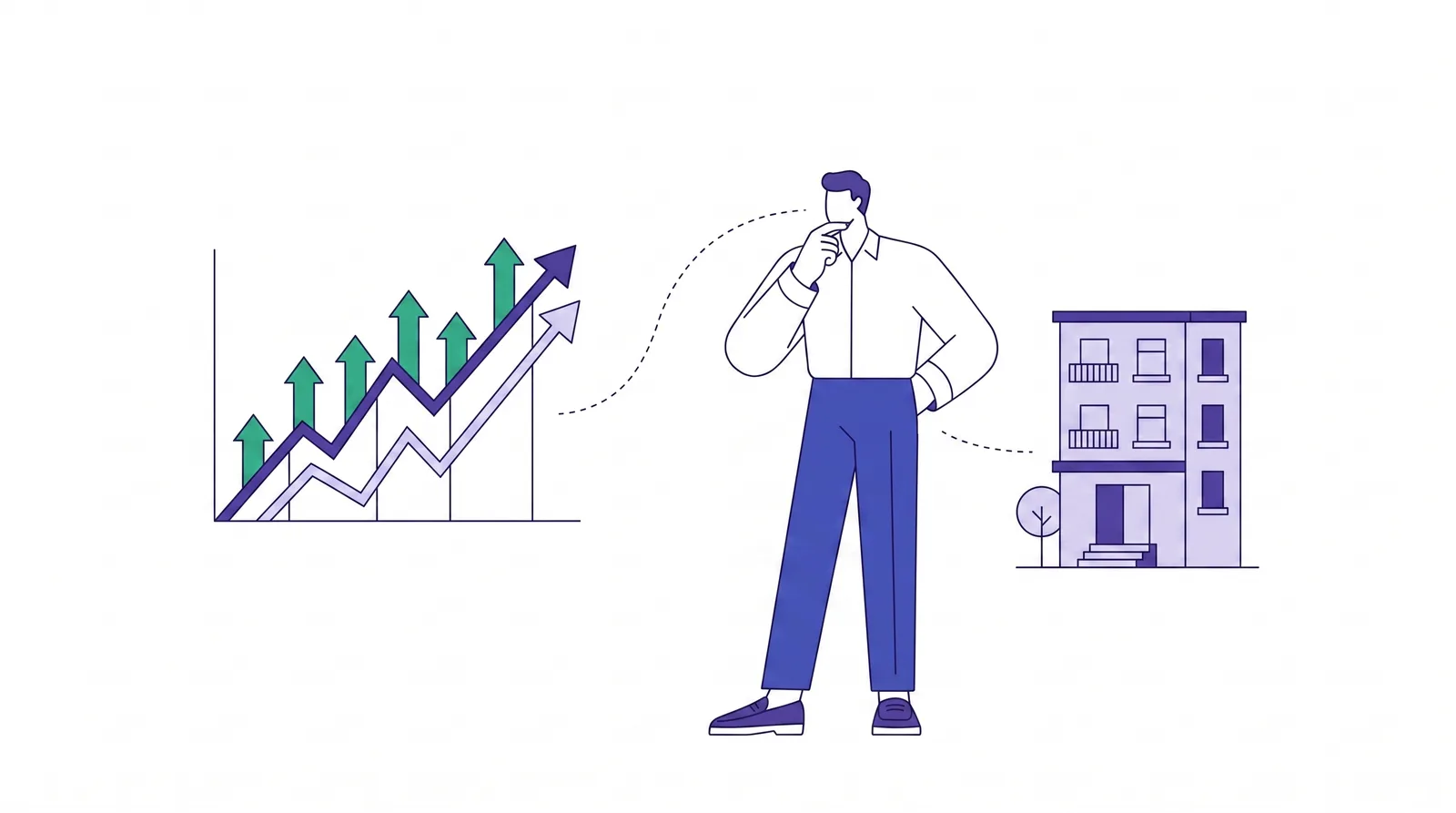
Neither stocks nor Dubai real estate is objectively "better". Property offers leverage, rental income and a tangible asset, but costs 7 to 8% just to buy and can take months to sell. Global stocks cost almost nothing to trade and diversify across thousands of companies, but offer no leverage for most retail investors and swing more visibly in price. The right answer depends on your timeline, liquidity needs and existing exposure to the UAE economy. Here is how to compare them properly.
How do the returns actually compare?
Start with what each asset has historically delivered, stripped of marketing.
Dubai residential property produced an average gross rental yield of roughly 5.5% citywide as of mid-2026, with studios and smaller apartments yielding more (7% or higher in some communities) and villas less (often under 4.5%). Gross means before costs: once you deduct service charges, maintenance, vacancy periods and management fees, net yields typically land 1.5 to 2 percentage points lower, so a realistic net income figure is 3.5 to 5%. Capital growth comes on top, but it is cyclical: Dubai prices fell for roughly six years after 2014 before the strong post-2020 run, so your entry point matters enormously.
Globally diversified stocks (via low-cost index ETFs) have historically returned roughly 6 to 8% per year in USD over long periods, dividends included, with no rent to collect and no tenants to manage, but with visible drawdowns of 20 to 50% along the way.
On raw long-run returns, the two are closer than partisans of either side admit. The real differences are in costs, liquidity, leverage and concentration.
What do transaction costs look like on each side?
This is where the gap is widest, and it is worth seeing in dirhams.
Buying a AED 1.5 million apartment in Dubai typically involves:
| Cost item | Typical amount |
|---|---|
| Dubai Land Department (DLD) transfer fee, 4% | AED 60,000 |
| Trustee office fee plus VAT | AED 4,200 |
| Agent commission, 2% plus VAT | AED 31,500 |
| Mortgage registration, 0.25% of loan, plus valuation | AED 5,500 to 7,000 |
| Bank arrangement fee, typically up to 1% of loan | AED 8,000 to 11,000 |
| Total upfront | Roughly AED 110,000 to 115,000 (7 to 8%) |
Selling later usually costs another 2% agent commission plus VAT, so a full buy-and-sell round trip consumes roughly 9 to 10% of the property value. The property must appreciate by that much just for you to break even on costs.
Investing the same AED 110,000 in a globally diversified ETF through a low-cost broker typically costs a few dirhams in commission and an ongoing fund fee of 0.03 to 0.25% per year. The round trip is under 0.1%. You can see how much fee drag compounds over decades with the savings plan fee calculator, which applies equally to any high-cost investment route.
What about liquidity and leverage?
These two factors pull in opposite directions.
Liquidity favours stocks
You can sell an ETF in seconds at a transparent price and have cash within days. Selling a Dubai apartment takes weeks to months, involves negotiation, and in a soft market you may need to cut the price meaningfully to find a buyer. If there is any chance you will leave the UAE at short notice, that difference matters more than most spreadsheets show. Our guide on how beginners can start investing in the UAE covers how to keep an accessible, liquid core portfolio.
Leverage favours property
Under Central Bank of the UAE (CBUAE) rules, an expat buying a first home under AED 5 million can borrow up to 80% of the value. Leverage transforms returns: if you put AED 375,000 down (25%) on a AED 1.5 million apartment and it appreciates 20%, your equity gain is roughly 80% before costs. No mainstream regulated route gives a retail stock investor 4x leverage on those terms, and margin loans are far riskier because shares can be force-sold in a crash. Leverage cuts both ways though: the same 20% fall wipes out most of your deposit. Run the numbers with the mortgage affordability calculator, which includes the roughly 7%+ upfront fees.
What is concentration risk, and why does it matter for expats?
If you live and work in the UAE, your salary already depends on the UAE economy. Buying a Dubai property stacks another large, undiversified bet on the same economy, the same city, sometimes the same industry that employs you. A downturn can hit your job, your rent income and your property value simultaneously.
A global ETF spreads your money across thousands of companies in dozens of countries, which is precisely the diversification an expat's finances usually lack. This argument is covered in depth in our guide to ETF investing for expats in the UAE.
So which should you choose? A simple framework
Ask these four questions instead of looking for a universal winner:
-
Timeline. Under 7 to 10 years, or any chance of leaving the UAE early: stocks (or even cash) usually make more sense, because property transaction costs need years of growth to recover.
-
Liquidity. If this money might be needed for an emergency, school fees or a move home, do not lock it in property.
-
Existing exposure. If your job, gratuity and home are already UAE-linked, global stocks add diversification; another Dubai asset adds concentration.
-
Temperament and effort. Property rewards hands-on owners who can handle tenants, service charges and paperwork. Stocks reward people who can ignore volatility and keep investing monthly from their salary.
Many long-term UAE residents sensibly end up with both: a home they live in (which is partly a lifestyle decision, covered in buying your first home in the UAE) plus a monthly ETF investing habit. What rarely makes sense is choosing property purely because it feels tangible, or stocks purely because a chart went up last year.
FAQ
Is Dubai real estate better than stocks for rental income?
For current income, property usually wins on paper: 5 to 7% gross yields versus roughly 1.5 to 2.5% dividend yields on global equity ETFs. But net property income after service charges, maintenance, vacancies and management is typically 3.5 to 5%, and it arrives with far more effort and less diversification than dividends do.
How much do I really pay in fees when buying property in Dubai?
Budget roughly 7 to 8% of the purchase price upfront: the 4% DLD transfer fee, about 2% agent commission plus VAT, trustee office fees of AED 2,000 to 4,000 plus VAT, and mortgage registration, valuation and bank fees if you finance. On a AED 1.5 million property that is roughly AED 110,000 or more.
Can I invest in Dubai property with a small amount instead of buying a whole unit?
Yes. DFSA-regulated fractional platforms and listed REITs let you gain property exposure from a few hundred or thousand dirhams, with better liquidity than direct ownership. You give up leverage and control, and fees vary, so read the fee schedule as carefully as you would for any fund.
Are stock market gains taxed in the UAE?
The UAE currently levies no personal income tax or capital gains tax on individuals' investment returns. Non-residents of other countries should check home-country rules, and US-listed assets carry US dividend withholding tax, which we explain in our guide to accessing US markets from the UAE.
Related reading:
Sources and References
-
Property Finder, DLD fees guide; 4% DLD transfer fee, trustee office fees, roughly 2% agent commission plus VAT, and total transaction costs of 7 to 10% (propertyfinder.ae)
-
Global Property Guide, UAE rental yields; Dubai citywide average gross rental yield of about 5.5% in Q2 2026 and yields by unit size (globalpropertyguide.com)
-
Central Bank of the UAE, mortgage loan regulations; loan-to-value caps including up to 80% for an expat's first home under AED 5 million (centralbank.ae)
-
Dubai Land Department, official fee schedule underlying the 4% transfer fee and registration charges (dubailand.gov.ae)
This article is for general information and does not constitute financial or investment advice. Property prices, rental yields, fees and regulations change, and all investing puts your capital at risk: past performance does not guarantee future results. Verify current DLD fees, mortgage terms and market data with official sources before committing money.
Published on 9 September 2026.