Debt Consolidation in the UAE: When It Helps, When It Hurts
-
Debt consolidation replaces several debts, usually credit cards at 2.5 to 3% per month, with one personal loan at a far lower annual rate.
-
On AED 40,000 of card debt, consolidating into a 48-month loan at 8% reducing can cut total interest from roughly AED 36,000 to about AED 6,900.
-
Buyout loans let a new bank settle your existing loans and cards directly; early settlement fees are capped at 1% (max AED 10,000).
-
Consolidation hurts when you stretch the tenor so far that total interest rises, or when you re-spend on the cleared cards.
-
The new loan must still fit the CBUAE 50% debt burden ratio and the 48-month personal loan tenor cap.
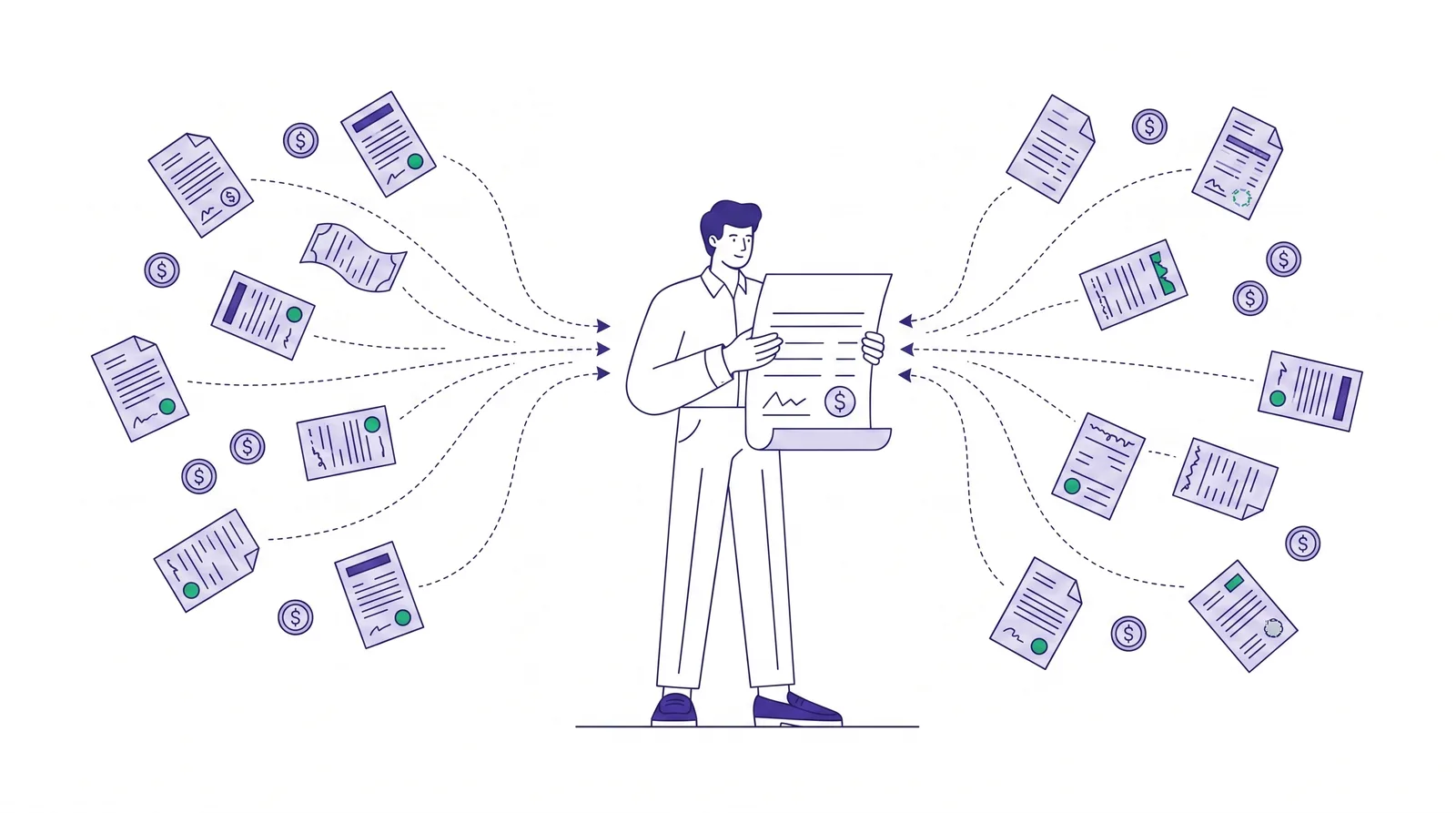
Debt consolidation means replacing several expensive debts, most often credit cards charging 2.5 to 3% per month, with a single personal loan at a much lower annual rate. Done properly in the UAE it can cut your interest cost by 70% or more and give you a fixed end date. Done badly, it stretches your debt over more years, adds fees, and frees up cards that quietly refill. Here is how to tell which side of the line you are on.
How does debt consolidation work in the UAE?
There are two common routes:
-
A standard personal loan. You borrow enough to clear your card balances and other small debts, then repay one instalment over up to 48 months (the CBUAE cap for personal loans). You settle the cards yourself.
-
A buyout (liability settlement) loan. A new bank takes over your existing loans and card balances, paying your old lenders directly against liability letters, and often requires your salary transfer. Buyouts are common when switching banks for a better rate; the mechanics overlap with salary transfer loans.
Either way, the maths only works because of the rate gap. Cards in the UAE typically charge 2.5 to 3.5% per month, roughly 30 to 42% per year if you carry a balance (see how credit card interest really works). Personal loans in 2026 typically cost 5.5 to 9% per year reducing. Swapping 36% debt for 8% debt is the entire point.
For card debt specifically, also compare a 0% balance transfer offer: for smaller balances you can clear within 6 to 12 months, a balance transfer is often cheaper than a loan.
Worked example: AED 40,000 of card debt
Sara carries AED 40,000 across two cards at 3% per month and can afford about AED 1,000 to 1,600 a month.
Staying on the cards. Interest alone is about AED 1,200 in the first month. If Sara pays AED 976 a month, her balance never falls; the payment does not even cover interest. To clear the cards in 48 months she must pay about AED 1,583 every month, and total interest comes to roughly AED 36,000. This is the minimum payment trap in action.
Consolidating. She takes a 48-month personal loan of AED 40,000 at 8% reducing:
| Cards at 3%/month | Consolidation loan at 8% reducing | |
|---|---|---|
| Monthly payment | AED 1,583 (to finish in 48 months) | AED 976.50 |
| Months to debt-free | 48 | 48 |
| Total interest | approx AED 36,000 | approx AED 6,870 |
| Arrangement fee (1%) | n/a | approx AED 400 |
Same payoff period, roughly AED 29,000 less interest, and a monthly payment about AED 600 lower. Alternatively Sara can keep paying AED 1,583 into the loan and be debt-free in about 27 months. Before applying, she should confirm the new instalment fits her debt burden ratio using the DBR and loan affordability calculator, and compare her actual card APRs with the UAE credit card rates tool.
When does consolidation help?
Consolidation genuinely helps when all of these are true:
-
The new rate is far below the old blended rate (single digits versus 30%+ card interest).
-
The tenor is the same or shorter than your realistic payoff timeline on the old debts.
-
Fees are modest: arrangement fee capped at 1% of the loan, early settlement on old loans capped at 1% of outstanding (maximum AED 10,000) under the CBUAE fee annexure.
-
You have a plan for the freed-up cards: reduce limits, or cancel them outright.
-
The payment fits comfortably inside the CBUAE 50% DBR cap, with room to spare.
When does consolidation hurt?
The tenor stretch
A lower rate over a much longer period can still cost more in dirhams. Rolling a loan with 18 months left into a fresh 48-month loan drops the monthly payment, which feels like relief, but you pay interest for 30 extra months. Always compare total interest, not just the instalment.
The re-spending trap
This is the one that does the real damage. Consolidation clears your cards but does not close them. Twelve months later many borrowers carry the new loan and rebuilt card balances, roughly double the original debt. If you consolidate, treat the cards as radioactive: cut limits, cancel extras, and automate full payment on anything you keep. Cancelling unused cards also improves your DBR, since many banks count about 5% of card limits as a monthly obligation; the mechanics are in our DBR guide.
Buyout fine print
Buyout loans usually require salary transfer, which limits your ability to change banks or negotiate later. Some bundle credit shield insurance into the instalment. Ask for the Key Facts Statement, the reducing rate, and the all-in monthly cost before signing.
If your problem is not the interest rate but the sheer size of the debt relative to income, consolidation alone will not fix it. Start with a payoff strategy instead; see how to get out of debt on a UAE salary.
FAQ
Does debt consolidation hurt your AECB score?
The application adds an enquiry and a new loan account, which can dip the score briefly. Over 6 to 12 months, replacing maxed-out cards with an instalment loan you pay on time usually improves it, because utilisation falls and payment history strengthens.
Can I consolidate debt from multiple banks into one loan?
Yes. Buyout loans are designed for exactly this: the new bank collects liability letters from your existing lenders and settles them directly. Early settlement fees on the old debts are capped at 1% of outstanding, maximum AED 10,000 per loan.
Is a balance transfer better than a consolidation loan?
For card balances you can realistically clear within the 0% promotional window (typically 6 to 12 months), a balance transfer is usually cheaper. For larger balances needing 2 to 4 years, a consolidation loan's lower long-term rate wins. Watch the processing fee on both.
Will a consolidation loan be approved if my DBR is already near 50%?
It can be, because consolidation often lowers your counted monthly obligations (one loan instalment replacing several card assumptions). But if the new instalment still breaches the 50% cap, the bank must decline or shrink the loan.
Related reading
Sources and References
-
Central Bank of the UAE Rulebook, Regulation No. 29/2011, Article 2 (Personal Loan); 48-month maximum tenor and 20 times salary cap governing consolidation loans (rulebook.centralbank.ae)
-
Central Bank of the UAE Rulebook, Regulation No. 29/2011, Article 7 and mortgage regulations Article 3; 50% debt burden ratio applied to new consolidated instalments (rulebook.centralbank.ae)
-
Central Bank of the UAE Rulebook, fee Annexure; early settlement capped at 1% of outstanding (max AED 10,000) and related consumer loan fee caps (rulebook.centralbank.ae)
-
UAE bank published card terms and comparison platforms; typical credit card interest of 2.5 to 3.5% per month and 2026 personal loan rates used in the worked example (mymoneysouq.com, youaemortgages.com)
This article is for general information and does not constitute financial advice. Consolidation and buyout terms, rates, and fees vary by bank and change frequently, so always confirm current terms in the Key Facts Statement and check the total cost over the full tenor before restructuring any debt.
Published on 9 September 2026.