Salary Transfer Loans in the UAE: The Golden Handcuffs Explained
-
A salary transfer loan (STL) gives you a cheaper rate because your employer commits to paying your salary, and usually your end of service benefits, into the lending bank.
-
The rate gap is real: STLs typically start around 4 to 8% per year reducing in 2026, while non-STL personal loans commonly run several percentage points higher. On AED 100,000 over 48 months, a 4-point gap costs roughly AED 8,900 extra.
-
The handcuffs: change jobs and the bank can hold your final salary and gratuity, and may require proof of new employment, a lump-sum payment, or full settlement.
-
CBUAE rules cap early settlement fees at 1% of the outstanding balance (maximum AED 10,000), so buyouts and refinancing are always worth pricing.
-
Exit routes: a buyout by another bank, transferring the new employer's salary to the same bank, negotiating after providing your new work contract, or settling from the gratuity.
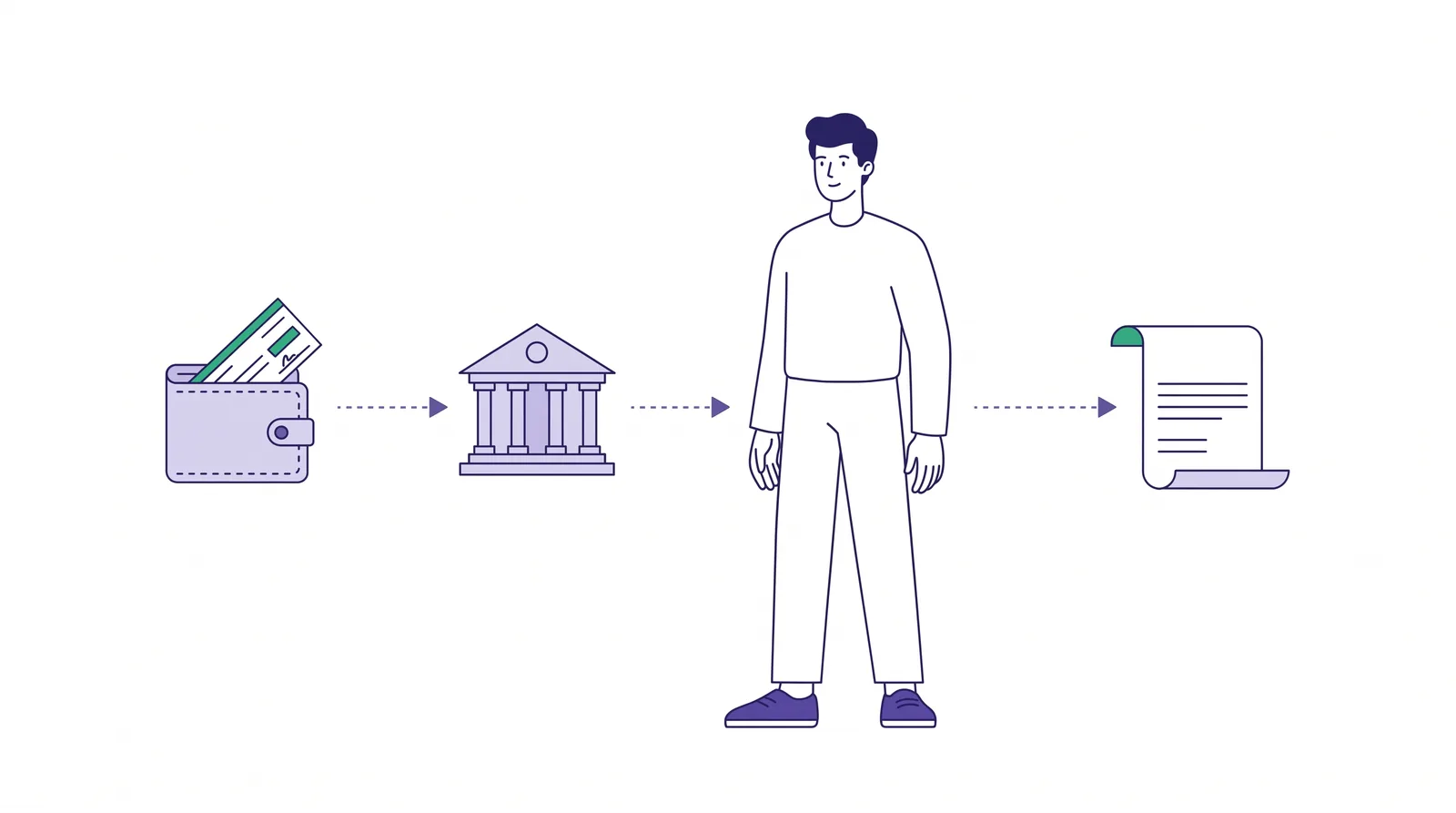
A salary transfer loan is a UAE personal loan priced on one condition: your employer signs a letter committing to pay your salary, and usually your end of service benefits (EOSB), into an account at the lending bank. In exchange you get a materially lower rate and a higher loan amount than a non-salary-transfer loan. The catch appears the day you resign: the bank is first in line for your final pay and gratuity, which is why STLs are nicknamed golden handcuffs. Here is how the mechanics work and how to unlock them.
What is a salary transfer loan and how does it work?
When you take an STL, three documents do the heavy lifting:
-
The salary transfer letter. Your employer undertakes to route your salary to the bank and, critically, to notify the bank if you leave and to transfer your EOSB there. The bank's risk drops because it sees and controls your income stream.
-
The loan agreement's assignment clause. Most STL contracts assign your EOSB to the bank as security, so your gratuity is contractually earmarked for the loan if you exit employment. UAE courts have generally upheld this set-off when the contract provides for it.
-
A security cheque in many cases, covering the loan value. Since the 2022 cheque reforms this is a civil enforcement tool rather than an automatic criminal matter; see what happens if you can't pay a loan in the UAE.
Standard CBUAE personal-loan limits apply on top: maximum 20 times your monthly salary, 48-month maximum tenor, and instalments within the 50% debt burden ratio (DBR) cap. Check your ceiling with the DBR and loan affordability calculator, and note that the basic-versus-allowances split on your payslip can affect what banks count; the payslip decoder shows how.
How much cheaper is a salary transfer loan?
The discount is the whole reason STLs dominate the UAE market. As of 2026, headline STL rates at major banks start around 4 to 6% per year reducing for strong profiles, with typical approved rates in the 5 to 9% range. Non-STL personal loans, where offered at all, commonly price several percentage points higher, often in the low-to-mid teens on a reducing basis, and come with lower maximum amounts and stricter criteria. Exact pricing varies by bank, salary, employer category, and AECB score.
| Feature | Salary transfer loan | Non-salary-transfer loan |
|---|---|---|
| Typical reducing rate (2026) | Roughly 4 to 9% per year | Roughly 8 to 15%+ per year |
| Maximum amount | Up to 20x salary (CBUAE cap) | Usually much lower multiples |
| Approval | Easier, wider eligibility | Stricter, fewer banks offer it |
| Salary account | Must be with the lender | Stays wherever you like |
| Job change | Bank controls final pay and EOSB | No hold on your final pay |
The worked example: what the gap costs, and what the handcuffs are worth
Borrow AED 100,000 over 48 months:
-
At 5% per year reducing (STL): instalment about AED 2,303, total interest about AED 10,540.
-
At 9% per year reducing (non-STL): instalment about AED 2,488, total interest about AED 19,430.
The salary transfer saves roughly AED 8,900 over four years, about AED 185 per month. That is genuine value, and it is also the price of your flexibility: the discount exists because the bank controls the account your income lands in. Deciding whether that trade is worth it depends mostly on how likely you are to change jobs mid-tenor. Flat-rate quotes muddy this comparison further; a "2.85% flat" offer is roughly 5 to 5.5% reducing, as explained in personal loans in the UAE: flat vs reducing.
What happens to your loan when you change jobs?
This is where the handcuffs tighten. The standard sequence:
-
Your employer notifies the bank (the salary transfer letter obliges them to) and pays your final salary and EOSB into your account at the lending bank.
-
The bank's systems flag the EOSB credit. Many banks automatically freeze the account or hold an amount when a final-settlement-type deposit lands, because the salary stream that secured the loan has stopped.
-
The bank applies its policy. Typically one of: hold funds up to the outstanding loan amount; ask you to sign a new undertaking and provide your new employment contract and first transferred salary; require a partial lump-sum payment; or, in the strictest reading of the contract, demand settlement of the full outstanding balance from the gratuity.
In practice, if you are moving straight into a new job and route the new salary to the same bank, most banks release the hold and continue the loan unchanged; some ask for one to three months of the new salary to arrive first, and some take one instalment in advance or apply part of the gratuity. If you are leaving the country or going freelance, expect the bank to hold the EOSB against the loan. Plan the timing before you resign: our guide to changing jobs in the UAE covers the full financial checklist, and what happens to your gratuity explains what the bank might be holding.
The worst position is resigning with no new job, a large outstanding STL, and no buffer: the bank can absorb your gratuity, and missed instalments then cascade into the default timeline.
How do you exit a salary transfer loan?
Four practical exits, in rough order of attractiveness:
1. Buyout by another bank
UAE banks actively poach performing loans. A buyout means the new bank settles your old loan and issues a new one, usually with your new salary transferred to them. CBUAE rules cap the early settlement fee at 1% of the outstanding balance, with a maximum of AED 10,000, so on AED 60,000 outstanding the exit toll is at most AED 600. If the new rate is at least about 1 percentage point lower and meaningful tenor remains, a buyout usually pays for itself within months. This is also how debt consolidation is typically executed in the UAE.
2. Move the new salary to the same bank
The zero-drama option when changing jobs: your new employer signs a fresh salary transfer letter to the same bank. Nothing about the loan changes. Ask the bank for its exact requirements in writing before your last working day at the old employer.
3. Negotiate the transition
If your new employer banks elsewhere (some companies have exclusive WPS arrangements), ask the lender for a conversion to non-STL terms. Expect a rate increase of a few percentage points, or a request for partial prepayment. Compare that against a buyout before agreeing.
4. Settle from the gratuity or savings
If the outstanding balance is small relative to your EOSB, letting the loan be settled at exit can be the cleanest break, and the 1%/AED 10,000 early settlement cap applies here too. Just do not surrender your entire gratuity by default; it is your retirement seed money, as we argue in why gratuity is not a pension.
Should you take a salary transfer loan at all?
Take the STL discount when your job is stable, the tenor is short relative to your plans, and the rate gap is wide. Prefer non-STL (or a smaller loan, or none) when you expect to switch employers or leave the UAE within the tenor, when you are close to the 50% DBR cap, or when the "discounted" STL is quoted flat and is not actually cheap once converted. And always read the EOSB assignment clause before signing; it is the sentence that defines your exit.
FAQ
Can my bank really take my gratuity when I resign?
If your loan contract assigns your EOSB and your salary was transferred under an employer letter, yes: the bank can hold and apply your gratuity toward the outstanding loan when your employment ends. Courts have generally upheld contractual set-off. What the bank cannot do is seize funds arbitrarily with no contractual or court basis; if that happens, complain to the bank and then to Sanadak, the financial ombudsman.
My new employer pays through a different bank. Will my loan default?
Not automatically. Tell your lender before the switch, provide the new contract, and agree terms: conversion to non-STL pricing, a buyout by the new employer's bank, or continued instalments via standing order. Problems start when the salary silently stops arriving and the bank's system treats it as a job-loss event.
Is the STL rate advantage worth the lock-in?
On our AED 100,000 example the discount is worth roughly AED 8,900 over four years. If there is a real chance you change jobs mid-loan and your next employer cannot transfer salary to your lender, price in the friction: possible EOSB hold, conversion to a higher rate, or a buyout fee. For short tenors and stable employment, the STL usually wins.
Do salary transfer rules differ for Islamic banks?
The structure differs (typically Murabaha or Tawarruq based financing rather than an interest-bearing loan) but the salary transfer letter, EOSB assignment, and job-change mechanics are essentially the same. Compare the effective profit rate on a reducing basis exactly as you would an interest rate; see Islamic banking in the UAE.
Related reading
Sources and References
-
Central Bank of the UAE, Regulations Regarding Bank Loans and Services Offered to Individual Customers (Notice 29/2011); 20x salary cap, 48-month tenor, 50% DBR, and the 1% (max AED 10,000) early settlement fee cap (centralbank.ae)
-
Emirates NBD and other UAE bank product pages for salary transfer loan terms and indicative rates as of 2026 (emiratesnbd.com, adcb.com)
-
UAE bank comparison data for salary transfer vs non-salary-transfer personal loan rate ranges as of 2026 (yallacompare.com, youaemortgages.com)
-
Khaleej Times legal Q&A on banks deducting loan amounts from end of service gratuity and the enforceability of EOSB assignment (khaleejtimes.com)
-
Gulf News reporting on bank practices when salary transfers stop and on ILOE/gratuity set-off questions (gulfnews.com)
This article is for general information and does not constitute financial or legal advice. Loan terms, rates, fees, and job-change policies vary significantly by bank and change frequently, so always confirm current terms in your loan contract and with the lender directly. For disputes over salary or gratuity holds, consult a licensed legal professional in the UAE.
Published on 9 September 2026.