How Much Can You Borrow in the UAE? A DBR Worked Example
-
Your borrowing power is set by two caps working together: the 50% Debt Burden Ratio and the 20x salary limit on personal loans. Whichever binds first decides your maximum.
-
On a AED 20,000 salary with a AED 1,800 car instalment and a AED 25,000 card limit, the realistic new personal loan is roughly AED 280,000 to 300,000 over 48 months, not the AED 400,000 the 20x rule alone suggests.
-
Unused credit card limits quietly shrink the answer, because banks count around 5% of the limit as a monthly commitment whether you use the card or not.
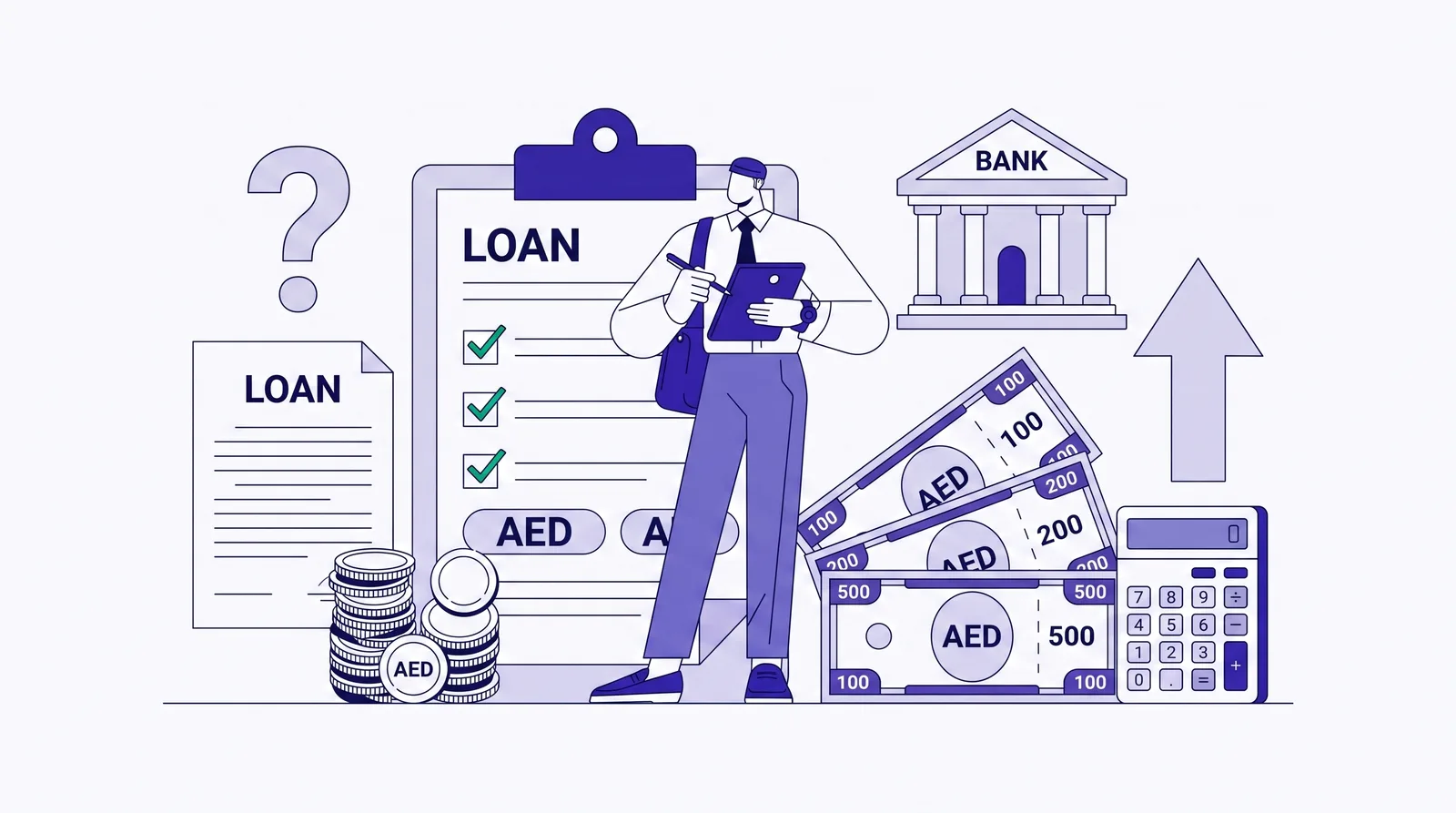
"How much can I borrow" has a precise, calculable answer in the UAE, because the constraints are written into regulation. Here is the arithmetic, using one worked example you can substitute your own numbers into. If you'd rather skip the math, our free DBR & Loan Affordability Calculator runs it instantly.
The three constraints
-
DBR cap: all monthly installments together ≤ 50% of gross salary plus regular income (the full rule explained here).
-
Size cap: total personal loan amount ≤ 20 times monthly salary.
-
Tenor cap: personal loans repay within 48 months (car loans 60, mortgages 25 years).
Worked example: Rania, AED 20,000/month
Rania earns AED 20,000 gross. She has a car loan installment of AED 1,800 and one credit card with a AED 25,000 limit she pays in full monthly.
Step 1: Maximum total installments. 50% × 20,000 = AED 10,000/month across everything.
Step 2: Subtract existing commitments. Car loan: AED 1,800. Credit card: counted at 5% of limit = AED 1,250. Committed: AED 3,050. Headroom for a new loan: 10,000 − 3,050 = AED 6,950/month.
Step 3: Convert headroom to loan size. At an indicative 7% reducing rate over the maximum 48 months, an installment of AED 6,950 services a loan of roughly AED 290,000. (At 6% it's ~AED 296,000; at 8% ~AED 285,000. Rate moves the answer less than people expect; tenor and headroom move it more.)
Step 4: Check the 20x cap. 20 × 20,000 = AED 400,000. Not binding here; the DBR is the tighter constraint, as it usually is for anyone with existing commitments.
Result: Rania can borrow about AED 290,000, not 400,000.
How to raise the number (legitimately)
-
Reduce card limits before applying. Cutting Rania's limit to AED 10,000 frees AED 750/month of headroom, worth roughly AED 31,000 of extra loan. Weigh this against the credit file effects covered in what hurts your AECB score.
-
Document regular side income. Verifiable rental income raises the denominator directly. One-off bonuses don't.
-
Clear the smallest installment. Killing a AED 900/month commitment adds about AED 37,000 of capacity at current rates.
What doesn't help
A higher credit score doesn't raise the cap (it improves your rate and approval odds, a separate gate covered in minimum AECB scores by product). End-of-service benefits can't be pledged as a repayment source. And a longer tenor beyond 48 months isn't available for personal loans, though car loans stretch to 60 months, which is one reason car finance math works differently.
The mortgage variant
For home loans the same 50% applies, but the bank stress-tests your DBR at 2 to 4 percentage points above the offered rate, so your effective headroom is smaller than the naive calculation. Down payment rules (LTV caps) then constrain the property price separately.
One caution
The 50% is a regulatory maximum, not a recommendation. A household committing half its gross income to debt service has no shock absorber. Most planners suggest staying nearer 30 to 35%, and the calculator shows both your regulatory maximum and a comfort-zone figure side by side.
Sources and References
-
CBUAE Rulebook, Regulation No. 29/2011, Articles 2, 3 and 7 (rulebook.centralbank.ae)
-
CBUAE Rulebook, Regulations Regarding Mortgage Loans, Article 3 (rulebook.centralbank.ae)
This article is for general information and does not constitute financial advice.