The UAE Voluntary Savings Scheme (Cabinet Resolution 96/2023) Explained
-
Cabinet Resolution No. 96 of 2023 created a voluntary alternative to traditional gratuity.
-
Employers who join contribute monthly to a regulated investment fund instead of accruing a lump sum.
-
Rates are 5.83 percent of basic salary under five years of service and 8.33 percent at five years or more.
-
On enrolment, the employer settles gratuity accrued to that date and stops traditional accrual.
-
DIFC and ADGM are not covered, because they have their own schemes.
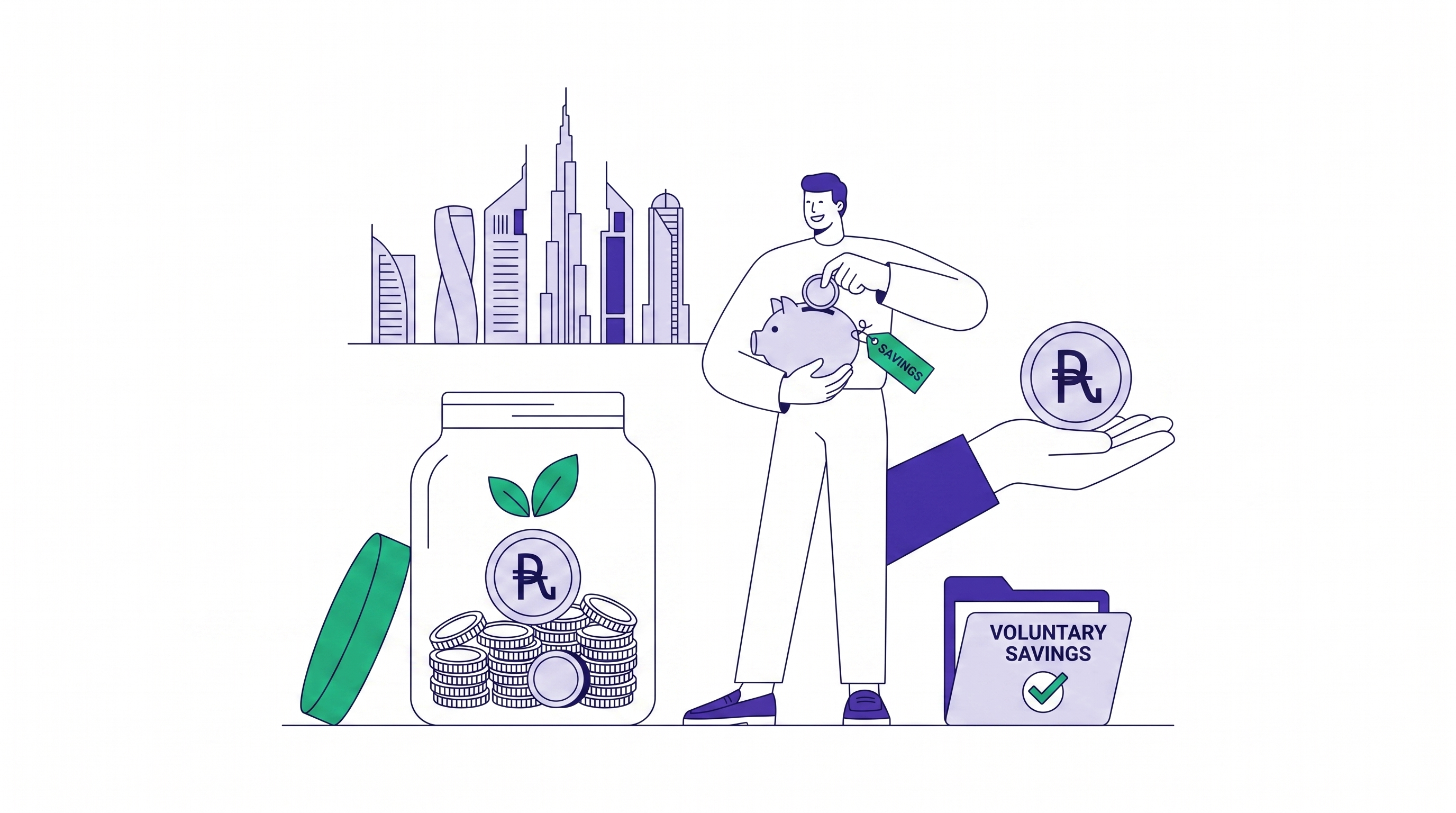
Quick answer: Introduced by Cabinet Resolution No. 96 of 2023, the voluntary Savings Scheme lets private-sector employers replace traditional gratuity accrual with monthly contributions to a regulated investment fund: 5.83 percent of basic salary for employees under five years of service and 8.33 percent for five years or more. Participation is currently optional, and DIFC and ADGM have their own schemes.
The Savings Scheme is MoHRE's answer to two weaknesses of traditional gratuity: it is not funded until you leave, and it does not grow. It is the forward-looking chapter of our complete guide to UAE end-of-service gratuity.
How it works
-
Employers opt in and then contribute monthly to an approved investment fund instead of accruing a lump sum.
-
Basic contribution rates mirror gratuity: 5.83 percent of basic salary under five years of service, and 8.33 percent at five years or more.
-
Contributions must be transferred within 15 days of the start of each month.
-
On enrolment, the employer settles gratuity accrued up to that date and stops the traditional accrual going forward. The traditional method is explained in how to calculate gratuity in the UAE.
Employee voluntary contributions
Beyond the employer's mandatory contribution, enrolled employees can add their own voluntary savings. A capital-guarantee fund is the default for those who do not choose, with risk-based funds available for those who want market exposure.
Who it applies to
| Covered by CR 96/2023 | Not covered (separate schemes) |
|---|---|
| Mainland private-sector employers | DIFC, which uses DEWS |
| Most MoHRE-regulated free zones | ADGM, with its own April 2025 scheme |
Compare the free zone schemes in DIFC (DEWS) vs ADGM vs mainland gratuity.
Is it becoming mandatory?
As of mid-2026 the scheme is voluntary, but momentum is building. A public consultation on wider adoption closed in early 2026, and many advisers expect a phased move toward mandatory participation. Employers are being encouraged to evaluate providers now.
A note on calculators
The UAE gratuity calculator estimates your traditional end-of-service entitlement. If your employer has enrolled you in the Savings Scheme, your benefit is your fund balance plus investment returns instead, so check your provider statement for the current value.
FAQ
What is Cabinet Resolution 96 of 2023?
The regulation that created the UAE's voluntary alternative end-of-service Savings Scheme, letting employers fund gratuity through regulated investments.
Do I lose my old gratuity if my employer joins?
No. Your employer must settle gratuity accrued up to the enrolment date. Only future benefit accrues through the scheme.
Can I contribute my own money?
Yes. Enrolled employees can make voluntary contributions on top of the employer's.
Sources and References
-
Cabinet Resolution No. 96 of 2023 (voluntary alternative end-of-service savings scheme)
-
Ministry of Human Resources and Emiratisation, savings scheme guidance (mohre.gov.ae)
-
UAE Government portal, alternative end-of-service savings systems (u.ae)
This article is for general information and does not constitute legal advice. End-of-service entitlements and enrolment decisions should be reviewed with a qualified professional or the Ministry of Human Resources and Emiratisation (MoHRE).