How to Get Out of Debt in the UAE: Consolidation, Restructuring, and the Order That Works
-
The sequence that works: stop new borrowing, protect every minimum payment, consolidate expensive card debt into cheaper loan debt, then attack the remainder highest-rate first.
-
If your repayments already exceed 50% of income, CBUAE rules allow banks to restructure: extending a personal loan beyond 48 months is explicitly permitted for regularisation, provided no fresh funds are advanced.
-
Missed payments hurt far longer than debt itself. A default takes years to age off your AECB file; a high but current debt load repairs within months of clearing.
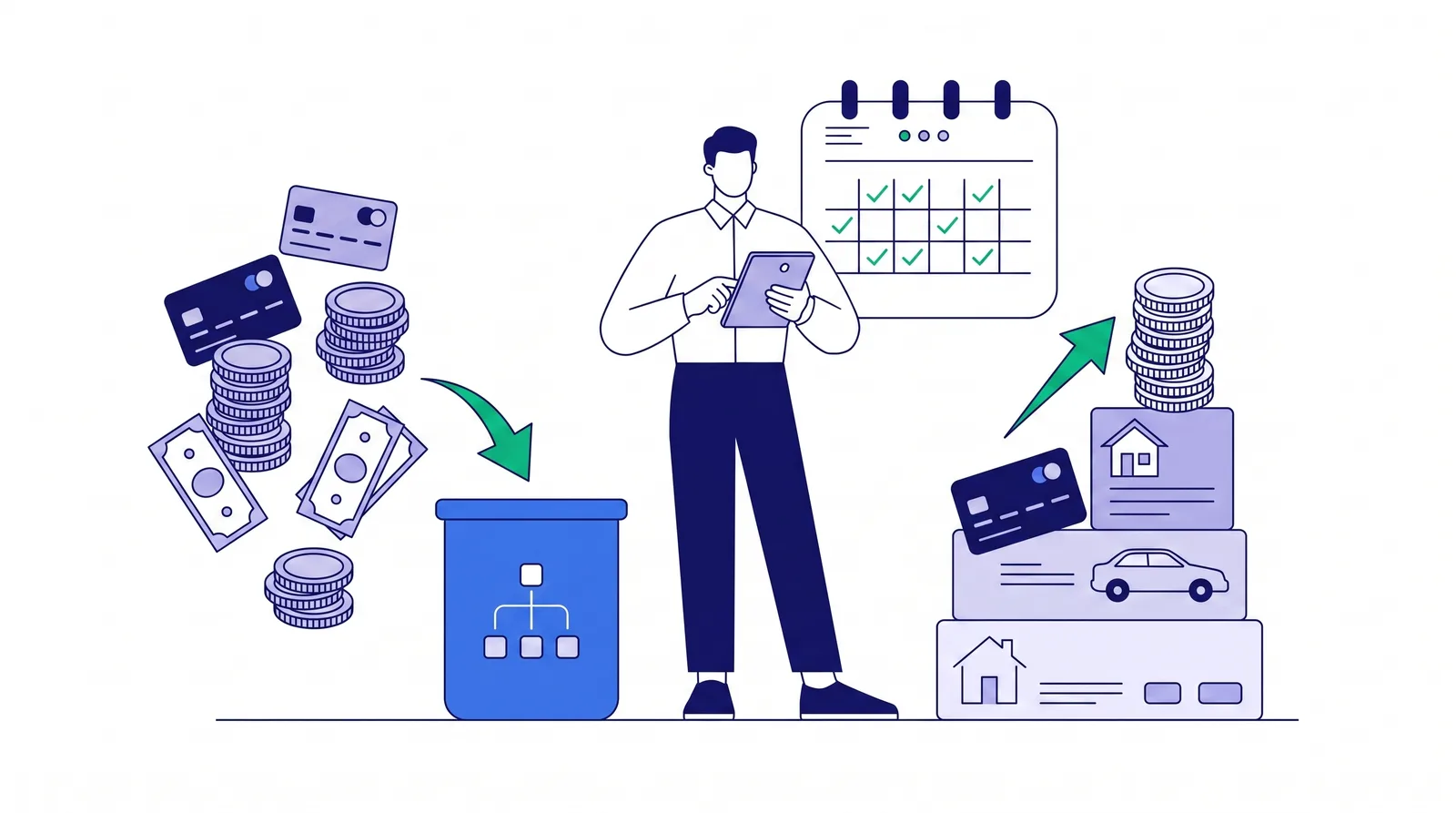
Debt problems in the UAE carry a specific fear because of the bounced-cheque history and job-loss exposure. The system has more regulated exits than most people know. Here they are, in the order to use them.
Step 0: Triage
List every obligation: balance, rate, minimum payment. Then compute your DBR: total monthly payments ÷ gross income (use the DBR & Loan Affordability Calculator). Two very different situations follow:
-
Under 50% and current on payments: you have a cost problem. Go to consolidation.
-
Over 50%, or already missing payments: you have a structural problem. Go to restructuring.
Path A: Consolidation (cost problem)
UAE card debt at roughly 3% per month versus personal loans at 6 to 9% per year means consolidation is usually the single biggest lever available; the full comparison is in personal loan vs credit card debt.
The mechanics: take one personal loan sized to clear all card balances, then reduce or close the cleared card limits so the freed capacity can't refill. Three conditions make it work:
-
The new instalment fits your 50% headroom and 48-month tenor (the caps explained).
-
Your AECB file still qualifies you for a decent rate; check it before applying.
-
The spending pattern that built the balances stops. Consolidation with unchanged behaviour reliably produces a loan plus rebuilt cards, which is strictly worse.
Buyout offers from competing banks do the same job; the exit fee on the old debt is capped at 1% / AED 10,000, as covered in early settlement fees.
Path B: Restructuring (structural problem)
When repayments exceed 50% of income, CBUAE clarifications to Regulation 29/2011 explicitly permit banks to restructure or reschedule loans beyond the normal 48-month tenor to bring the DBR back within limits, on the condition that no fresh funds are advanced. Banks may also defer up to two installments per year at their discretion.
Practically: approach your bank before you miss a payment, not after. Bring a written statement of income, obligations, and a proposed sustainable installment. Banks restructure reluctantly but they do it, because a restructured loan beats a defaulted one on their books too. If you hold loans at multiple banks, start with the largest exposure.
If negotiation fails, escalation paths exist: the CBUAE consumer protection channel and Sanadak, the banking ombudsman, both accept complaints about unreasonable treatment of distressed borrowers. UAE nationals may additionally qualify for government debt settlement initiatives that have operated in cycles for citizens' personal loans.
What to protect while you dig out
Your payment record is the asset that determines everything after the debt is gone. A 90-day default or bounced cheque stays visible on your AECB file for years and floors your score, as detailed in what hurts your AECB score. Concretely: pay every minimum before any extra payment anywhere, replace post-dated cheques with direct debits where possible, and if a cheque might bounce, call the bank before it does; the 2022 decriminalisation of most bounced cheques reduced the criminal exposure but the credit file damage is fully intact.
What to avoid
Loan sharks and unlicensed "debt help" firms charging upfront fees; new card applications mid-crisis (each inquiry lowers your approval odds later); and paying a settlement company to do what Sanadak does free. Also resist paying collectors ahead of your written priority order out of pressure; collectors call loudest, but the sequence above minimises total damage.
The exit checklist
Every cleared debt: get a clearance letter, then verify the account shows closed and settled on a fresh AECB report a cycle later. That paper trail is what turns "I paid it off" into a file a future lender believes.
Sources and References
-
CBUAE Rulebook, Regulation No. 29/2011, Additional Clarifications on restructuring beyond 48 months (rulebook.centralbank.ae)
-
Federal Decree-Law No. 42 of 2021 (Civil Procedure) and Federal Decree-Law No. 14 of 2020 amendments on cheques (uaelegislation.gov.ae)
-
Sanadak, banking and insurance ombudsman (sanadak.gov.ae)
This article is for general information and does not constitute financial advice.